

Intro
Technical debt is a hidden challenge that plagues many tech projects. It’s the cost of taking shortcuts or making quick fixes during development that will need to be addressed later. Technical debt can slow down development, increase costs, and hurt product quality.
Tech debt builds up over time as developers make trade-offs to meet deadlines or add new features quickly. While these decisions may seem harmless at first, they can create big problems down the road.
As debt piles up, it becomes harder to add new features or fix bugs. This drags down the whole development process.
- Intro
Understanding Technical Debt
Technical debt is a crucial concept in software development. It impacts project timelines, costs, and quality. Let’s explore its definition, types, and a helpful framework for categorizing it.
Definition of Technical Debt
Technical debt refers to the future costs a development team faces due to taking shortcuts or making quick fixes. It’s like borrowing time – you gain speed now, but pay interest later. This debt accumulates over time, making future changes harder and more expensive.
Teams often take on technical debt to meet tight deadlines or launch features quickly. While this can be useful short-term, it can lead to big problems if not managed well.
Technical debt isn’t always bad. Sometimes it’s a strategic choice to get to market faster. The key is being aware of it and planning to address it.
Types of Technical Debt
Technical debt comes in different forms:
- Code debt: Messy or hard-to-understand code
- Design debt: Poor system architecture
- Test debt: Lack of proper testing
- Documentation debt: Missing or outdated docs
Unintentional debt happens due to lack of skills or time. Intentional debt is a conscious choice to move faster.
Some debt is visible and easy to spot. Other types are hidden, only showing up when you try to make changes later.
The Technical Debt Quadrant by Martin Fowler
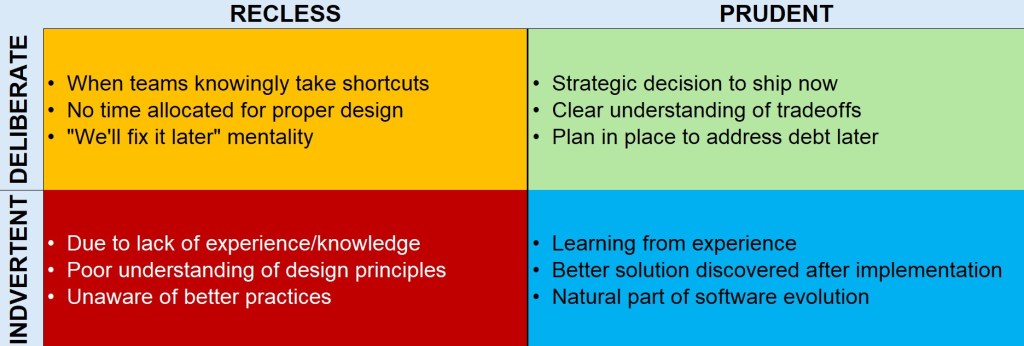
Martin Fowler, a software expert, created a useful way to think about technical debt. His Technical Debt Quadrant helps teams understand and manage different types of debt.
The quadrant has two axes:
- Reckless vs. Prudent
- Deliberate vs. Inadvertent
This creates four types of technical debt:
- Reckless and Deliberate
- Reckless and Inadvertent
- Prudent and Deliberate
- Prudent and Inadvertent
Each type needs a different approach. Reckless debt is often harmful, while prudent debt can be a useful tool if managed well.
Teams can use this framework to make better choices about when to take on debt and how to pay it back.
Causes of Technical Debt
Technical debt builds up over time in software projects due to various factors. These causes can lead to growing complexity and challenges for developers.
Factors Leading to Increased Debt

Unclear project requirements often result in technical debt. When goals are not well-defined, developers may create suboptimal solutions that need reworking later.
Failure to follow coding standards can produce hard-to-maintain code. This “bad code debt” becomes costly to fix over time.
Pressure to deliver quickly sometimes leads to cutting corners. Developers may take shortcuts to meet tight deadlines, creating future issues.
Outdated technologies contribute to technical debt as systems become harder to update and integrate with newer solutions.
Lack of testing is another key factor. Inadequate quality assurance allows bugs and issues to accumulate in the codebase.
Comparison to Financial Debt
Technical debt shares similarities with financial debt. Both involve trade-offs between short-term gains and long-term costs.
Taking on some debt can speed up initial development, like how a loan provides quick cash. But interest builds up over time in both cases.
Unpaid technical debt makes future work more difficult and expensive, similar to compounding financial interest.
“Paying down” technical debt requires dedicating time and resources to improving existing code. This is like making extra payments on a loan to reduce the principal balance.
Ignoring technical debt can lead to “bankruptcy” – where a system becomes too costly or complex to maintain and must be replaced entirely.
Impact and Consequences
Technical debt can have far-reaching effects on software projects and businesses. It affects quality, maintenance, and the bottom line in significant ways.
On Software Quality and Maintenance
Technical debt makes code harder to work with over time. It leads to more bugs and errors in software. Developers spend extra time fixing issues instead of adding new features.
Poor user experience often results from technical debt. Software becomes slow and unstable. This frustrates users and damages the product’s reputation.
Maintaining and updating code gets more difficult. Simple changes can cause unexpected problems. Testing takes longer as the system grows more complex.
Technical debt hurts scalability. Adding new features or handling more users becomes challenging. The software struggles to adapt to changing needs.
On Business and Revenue
Technical debt increases costs for businesses. More time and resources go toward fixing existing problems. This leaves less budget for innovation and growth.
Product releases slow down. The company loses competitive edge in the market. Customers may switch to faster-moving rivals.
Revenue growth suffers as technical debt piles up. Dissatisfied users lead to lost sales and poor reviews. The product struggles to attract new customers.
Hiring and retaining talent becomes harder. Skilled developers prefer working on modern, well-maintained codebases. High turnover adds to costs and slows progress further.
Best Practices for Managing Technical Debt
Managing technical debt requires a proactive approach and consistent effort. Teams can effectively tackle debt by focusing on key areas and integrating debt reduction into their workflows.
Prioritizing Refactoring Efforts
Refactoring is crucial for managing technical debt. Teams should regularly review and assess their codebase to identify areas needing improvement.
Not all debt is equal, so prioritize based on impact and urgency.
Create a debt backlog to track issues. Rank items by their effect on system performance, maintainability, and future development speed. Address high-priority debt first to maximize impact.
Consider using tools to analyze code quality and complexity. These can help spot problem areas objectively. Set aside time in each sprint for debt reduction work.
Incorporating Debt Reduction Into Development
Make debt management an ongoing part of the development process. Treat technical debt items with the same importance as new features.
Include debt-related tasks in sprint planning and allocate resources accordingly.
Encourage developers to improve code as they work on it. This “boy scout rule” approach helps prevent debt buildup.
Set coding standards and do regular code reviews to catch issues early.
Educate the team on the costs of technical debt. This builds understanding and support for ongoing maintenance work. Create a culture where quality is valued alongside speed.
Effective Documentation and Standards
Clear documentation and consistent standards are key to managing technical debt.
Keep documentation up-to-date as systems evolve. This helps new team members get up to speed and reduces the risk of knowledge loss.
Create and enforce coding standards across the team. This improves code consistency and readability. Use automated tools to check for style violations.
Document design decisions and technical tradeoffs. This context is valuable when revisiting code later. Include comments explaining complex logic or temporary workarounds.
Maintain a knowledge base of common issues and solutions. This can speed up problem-solving and prevent repeat mistakes.
Strategies to Avoid Accumulating Debt
Tech teams can take proactive steps to prevent technical debt from piling up. These approaches focus on improving development practices and quality control measures.
Adopting Agile Methodologies
Agile methodologies help teams stay flexible and responsive to change. They break work into small, manageable chunks called sprints. This allows for frequent reassessment and course correction.
Teams using agile practices can:
- Hold daily stand-up meetings to track progress
- Use sprint planning to prioritize tasks
- Conduct regular retrospectives to improve processes
Agile promotes continuous improvement. It encourages developers to refactor code often, preventing small issues from growing into major problems.
Ensuring Proper Testing and Reviews
Thorough testing and code reviews are key to maintaining code quality.
Automated testing helps catch bugs early. It allows teams to deploy changes with confidence.
Effective testing practices include:
- Unit tests for individual components
- Integration tests for system interactions
- End-to-end tests for full user flows
Code reviews provide a second set of eyes on changes. They help spot potential issues before code goes live. Reviews also spread knowledge across the team.
Teams should set clear standards for code quality. This ensures everyone follows best practices. It leads to more maintainable and scalable systems over time.
Role of Project Management in Tech Debt
Project management plays a crucial role in managing technical debt. It involves setting realistic goals and allocating resources effectively to keep tech projects on track.
Setting Realistic Requirements
Project managers must set achievable requirements to avoid accumulating technical debt. They work with product owners to define clear goals that balance short-term needs and long-term sustainability.
By prioritizing quality, project managers help teams avoid shortcuts that lead to debt. They encourage addressing issues quickly through refactoring and code cleanup.
Regular reviews of project requirements allow adjustments as needed. This flexible approach helps prevent technical debt from piling up due to outdated or unrealistic expectations.
Resource and Time Allocation
Proper resource allocation is key to managing technical debt. Project managers must balance speed to market with code quality and maintainability.
They work closely with development teams to identify areas where technical debt impacts performance. By allocating time for debt reduction, they prevent small issues from becoming major problems.
Project managers also ensure transparency about technical debt. They communicate its impact on project timelines and costs to stakeholders, fostering understanding and support for debt reduction efforts.
Effective time management includes setting aside periods for refactoring and improving existing code. This proactive approach helps teams stay ahead of technical debt accumulation.
Technical Debt in the Software Development Lifecycle
Technical debt can arise at any stage of software development, impacting project health and long-term success. Early detection and maintaining code quality are crucial strategies for managing this challenge effectively.
Early Detection and Mitigation
Identifying technical debt early in the development process is key to minimizing its impact. Teams should implement code reviews and static analysis tools to catch potential issues before they become deeply embedded.
Regular audits of the codebase can help spot areas where debt is accumulating.
Prioritizing bug fixes and addressing legacy code issues promptly can prevent small problems from growing into major roadblocks. It’s important to allocate time for refactoring alongside new feature development.
Teams should also consider using technical debt tracking tools. These can help visualize debt over time and make it easier to prioritize which issues to tackle first.
Maintaining Code Quality Throughout
Consistent code quality is essential for preventing technical debt buildup. Implementing coding standards and best practices across the team helps ensure a unified approach to development.
Automated testing, including unit tests and integration tests, can catch issues early and maintain code integrity.
Continuous integration and deployment pipelines help enforce quality checks at every stage.
Regular code refactoring should be part of the development process. This involves improving code structure without changing its external behavior. It helps keep the codebase clean and manageable over time.
Encouraging a culture of quality within the development team is crucial. This means valuing clean, well-documented code and giving developers time to address technical debt as part of their regular workflow.
Monitoring and Measuring Technical Debt
Technical debt requires constant vigilance and quantification to manage effectively. Companies use various tools and strategies to track and assess its impact on their projects.
Static Code Analysis and Metrics
Static code analysis tools help identify potential issues in codebases without running the program. These tools scan source code for structural problems, bugs, and security vulnerabilities.
Code complexity metrics like cyclomatic complexity measure how difficult code is to understand and maintain. Higher complexity often indicates more technical debt.
Test coverage metrics show how much of the codebase is tested automatically. Low coverage can signal areas prone to bugs and technical debt accumulation.
Duplicate code detection finds repeated code segments that could be refactored. Excessive duplication makes maintenance harder and increases technical debt.
Governance and Portfolio Management
Effective governance helps organizations track and manage technical debt across projects. It involves setting policies, standards, and processes for debt management.
Regular audits assess the health of systems and identify areas needing improvement. These audits can reveal hidden technical debt before it becomes problematic.
Portfolio management tools help prioritize debt repayment efforts. They allow teams to visualize debt across projects and allocate resources effectively.
Some companies use a technical debt index to quantify overall debt levels. This index combines multiple metrics into a single score, making it easier to track changes over time.
Tracking time spent on maintenance versus new features helps gauge the impact of technical debt on productivity. High maintenance costs often indicate significant debt.


Leave a Reply