

- Introduction
- What is GenAI?
- Validation Through GenAI: Ensuring Viability
- Market Analysis with a GenAI Lens
- Real-World Applications: GenAI in Action
- Best Practices for Product Managers
- Overcoming Challenges
- The Future of Product Development with GenAI
- Expert Support: Partnering for Success
- Conclusion
Introduction
Drowning in user feedback? Burnt out from brainstorming? In the fiercely competitive market, crafting innovative products is make-or-break for businesses.
Enter Generative Artificial Intelligence (GenAI), the game-changer that’s propelling product development into the future. We are talking lightning-fast idea generation, smarter market analysis, and a streamlined process that’ll make you wonder where GenAI has been all your life.
Let’s move beyond traditional brainstorming methods and examine how generative AI can enhance your product development process. We’ll explore how this technology can foster innovation, from concept generation to the successful launch of products that give you a competitive edge in the market.
What is GenAI?
Generative AI refers to artificial intelligence systems that can create new content, whether that’s text, images, code, or other data. Unlike traditional AI that simply analyzes existing information, generative AI can produce original outputs based on patterns it has learned.
At the heart of generative AI lies a sophisticated architecture of neural networks, designed to mimic the human brain’s cognitive processes.
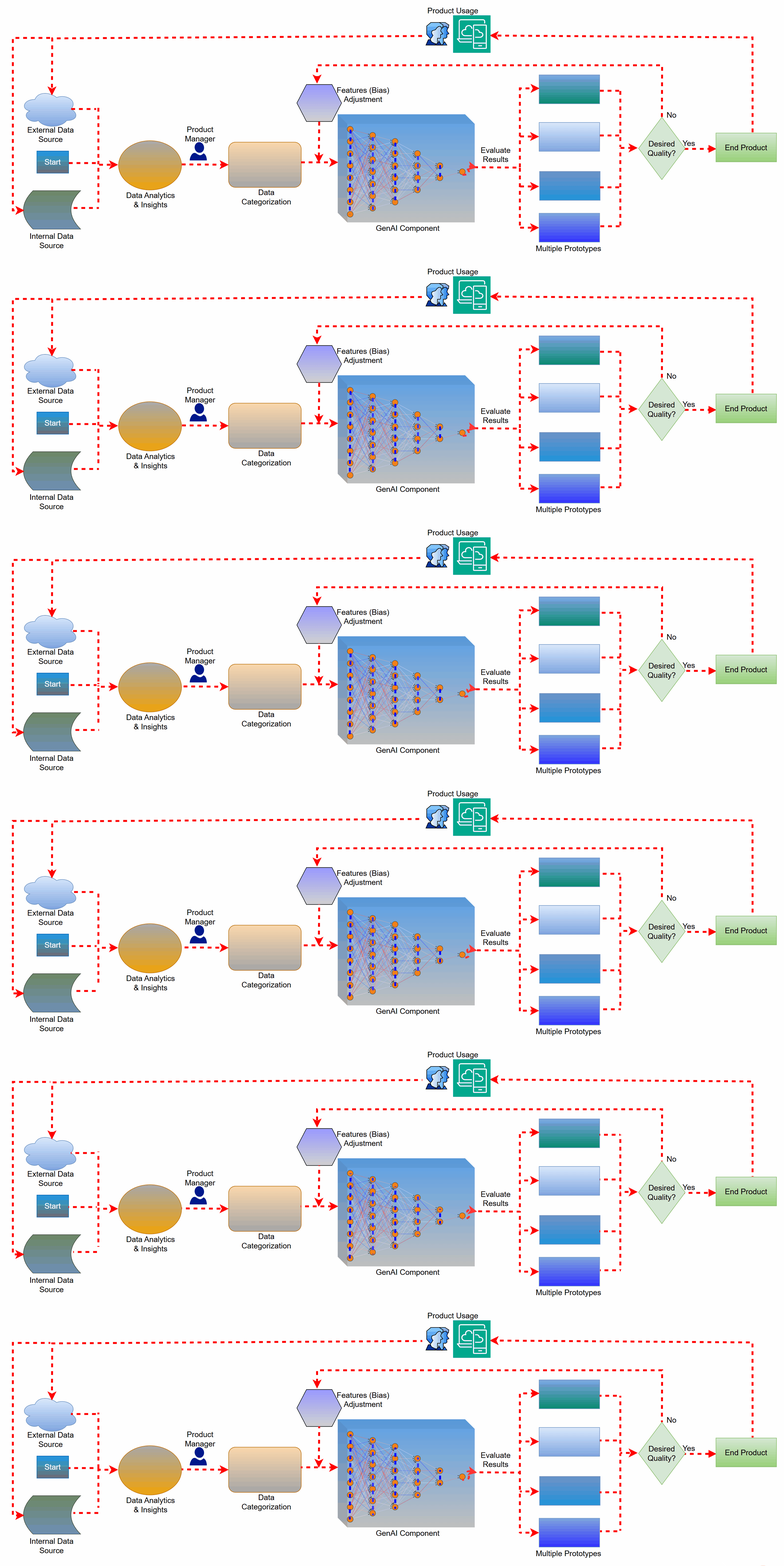
These deep learning models are trained on vast datasets, enabling them to recognize patterns, extract insights, and generate novel output with remarkable accuracy.
The process begins with the AI ingesting and analyzing diverse information sources such as text, images, audio, video, structured data and numerical data.
Through iterative learning cycles, the neural networks refine their understanding, developing an intricate web of connections that allow for nuanced interpretation and creative output.
What sets generative AI apart is its ability to not just analyze, but to create. By leveraging probabilistic modeling and complex algorithms, these systems can produce original content, ideas, and solutions that often surpass human capabilities in terms of speed and scale.
The applications are transformative across industries. In product development, generative AI can rapidly ideate and iterate designs, predict market trends, and optimize features based on user data.
The Rise of GenAI in Product Development
The infusion of Artificial Intelligence into the field of product development marks a pivotal shift in how ideas are birthed, validated, and brought to market.
GenAI stands out as a pinnacle of innovation, providing product managers with an unmatched array of tools to boost their creative endeavors. The advent of GenAI is not merely opportune; it is transforming our approach to and implementation of product development lifecycles.
At the heart of this evolution is the power of GenAI to dissect vast pools of data, recognize patterns, and extrapolate them into actionable insights, thereby aiding in the genesis of novel product ideas.
Given the relentless pace of market change, agility is essential for product success. GenAI therefore can provide product managers with the tools they need to quickly generate and refine ideas, transforming concepts into reality
Ideating with GenAI: Beyond the Conventional

The stage of ideation stands as a fertile ground for the germination of groundbreaking product concepts, a phase where the seeds of innovation are sown and nurtured.
In this vital phase, GenAI emerges not just as a tool, but as a creative partner that propels product managers beyond the boundaries of traditional brainstorming. By weaving together the threads of artificial intelligence, GenAI transforms the canvas of ideation into a dynamic landscape brimming with possibility.
This process of thought generation, supercharged by GenAI, is not confined to linear paths or predictable outcomes. It thrives on complexity and diversity, generating ideas that are as varied as they are viable.
From envisioning the next generation of wearable technology that seamlessly integrates with the human body, to conceptualizing smart home devices that anticipate and adapt to their users’ needs even before they are articulated, GenAI opens a gateway to unprecedented innovation.
The interaction with GenAI during the ideation phase is akin to engaging with a boundless mind, one that operates free of the constraints that typically hinder human innovators.
It offers a fresh perspective, untainted by biases or preconceived notions, allowing product managers to explore avenues previously deemed impractical or unimaginable. This collaboration between human intuition and machine intelligence fosters a culture of fearless innovation, where even the most audacious ideas are given the space to breathe and evolve.
In the following section, we look at look at a wide range of prototypes that Generative AI can produce.
Text Based Prototypes

- Product descriptions
- Marketing copy
- User interface text
- Chatbot conversation flows
- Financial reports or summaries
- Terms and conditions drafts
- FAQ responses
Visual Prototypes

- Wireframes for mobile or web applications
- User I/UX mockups
- Logo designs
- Data visualizations
- Custom icons or graphics
Code Prototypes

- Basic application structures
- API endpoints generation and documentation
- Database schemas
- Frontend components
- Simple algorithms or functions
- Configuration files
Data-driven Prototypes

- Synthetic datasets for testing
- Financial models
- Risk assessment frameworks
- Customer segmentation models
Voice and Audio Prototypes

- Voice assistant responses
- Interactive voice response (IVR) scripts
- Basic audio content for apps or tutorials
- Music composition
Process Prototypes:

- Workflow diagrams
- Decision trees for automated systems
- Customer journey maps
Document Prototypes

- Policy drafts
- Product requirement documents
- User manuals or guides
Conceptual Prototypes

- New product ideas
- Feature suggestions
- Problem-solving approaches
Personalization Prototypes
- Customized financial advice templates
- Personalized onboarding experiences
- Tailored product recommendations
Simulation prototypes:

- Market scenario simulations
- Customer behavior models
- Risk simulation models
Validation Through GenAI: Ensuring Viability

In product development, moving from the conceptual stage to product validation is a crucial turning point.
It is here that GenAI asserts its role not merely as an innovative tool but as an indispensable ally for product managers.
By seamlessly integrating the power of AI with data-driven insights, GenAI transcends traditional validation methods, ensuring that product ideas don’t just thrive on creativity but are grounded in viability.
Multiple Prototypes

Validation balances creative vision with market practicality. GenAI navigates this balance by producing multiple prototypes with varying features that can significantly aid product managers in the validation process.
Product managers can therefore make more data-driven decisions, reduce the risk of developing unwanted features, and increase the likelihood of creating a product that truly meets user needs and market demands.
This process unveils a rich tapestry of insights, allowing product managers to discern which ideas hold the most promise and which may require reevaluation.
Such a meticulous approach significantly elevates the probability of product success, marking a departure from the guesswork that often characterizes conventional validation processes.
Market Responses

GenAI’s predictive analytics capability is a game-changer in responding to the market demands. By simulating market responses to proposed products, GenAI offers a glimpse into potential future scenarios, enabling product managers to foresee and mitigate risks.
This forward-looking perspective is invaluable, as it not only validates the current appeal of a product idea but also its long-term sustainability and relevance in the market.
Classify Consumer Groups

Equally important is GenAI’s role in segmenting and understanding target demographics.
By dissecting consumer data, GenAI identifies preferences and unmet needs within different segments, providing a granular view of the marketplace.
This enables product managers to tailor their offerings more precisely, enhancing product-market fit and, ultimately, consumer satisfaction.
Feasibility of New Concepts

The role of GenAI extends beyond mere ideation. It acts as a crucible for testing the feasibility of new concepts, offering predictive insights that guide decision-making processes.
This predictive prowess is instrumental in validating the potential market success of products before significant resources are invested, thereby minimizing risks and optimizing resource allocation.
Market Analysis with a GenAI Lens

Embarking on a deep dive into the market landscape through the lens of Generative AI (GenAI) equips product managers with an unparalleled edge.
Within the complex ecosystem of market forces, understanding consumer behaviors, preferences, and the emerging trends is more than just an advantage—it’s a necessity.
The sophisticated algorithms and data processing capabilities of GenAI serve as the compass guiding product managers through this terrain, ensuring the journey toward innovation is both informed and strategic.
Hidden Market Opportunities

Utilizing GenAI for market analysis transcends the traditional, often labor-intensive methods of gathering insights.
With its ability to sift through vast datasets and identify patterns at an astonishing speed, GenAI uncovers hidden market opportunities and consumer desires that may have previously gone unnoticed.
This not only accelerates the decision-making process but also enhances the precision of targeting specific market segments, creating products that resonate on a deeper level with potential customers.
Competitive Analysis

Navigating the complex landscape of market forces requires a deep grasp of consumer patterns and motivations. GenAI facilitates a comprehensive competitive analysis, enabling product managers to benchmark their products against competitors and identify gaps in the market.
Understanding this is instrumental in crafting a product strategy that not only closes existing market gaps but also proactively anticipates consumer evolution, establishing a leadership position in the market.
Market Predictive Analysis
GenAI’s predictive analytics feature plays a pivotal role in forecasting future granular market trends.
Analysis of historical data, current market conditions, and consumer behavior patterns enables product managers to project the trajectory of market shifts and trends.
This foresight empowers product managers to align their product development strategies with upcoming market evolutions, ensuring that their offerings remain relevant and in demand.
Consumer Sentiment Analysis

The integration of GenAI in market analysis also extends to consumer sentiment analysis.
GenAI can examine online reviews, social media conversations, and other consumer-generated content to discern the underlying emotions and opinions regarding products and brands. This qualitative analysis, enriched by the quantitative prowess of GenAI, offers a holistic view of consumer satisfaction and expectations, guiding product managers in refining product features and crafting compelling value propositions.
In harnessing the power of GenAI for market analysis, product managers navigate a path marked by data-driven decisions, strategic foresight, and a profound understanding of the market landscape. This journey, powered by the sophisticated capabilities of GenAI, is not just about keeping pace with the market—it’s about leading the way in innovation and consumer engagement.
Real-World Applications: GenAI in Action

GenAI in Banking and Financial Industries
So how can this technology revolutionize banking products? Here are some key areas:
Personalized Financial Planning Tools
- Use Case: GenAI can analyze individual financial data, market trends, and risk profiles to generate customized financial plans and investment strategies.
- Innovation: Create an AI-driven “Financial Life Coach” app that provides real-time advice and adjusts strategies based on life events and economic changes.
Predictive Fraud Detection Systems
- Use Case: Develop advanced fraud detection models that can identify new, complex fraud patterns.
- Innovation: Design a real-time transaction monitoring system that adapts to emerging fraud techniques and provides explainable AI insights for investigations.
AI-Powered Loan Underwriting
- Use Case: Utilize GenAI to assess creditworthiness using alternative data sources.
- Innovation: Create a “Holistic Credit Score” product that considers non-traditional factors like gig economy income, social responsibility, and future earning potential.
Automated Portfolio Rebalancing
- Use Case: Develop AI models that continuously optimize investment portfolios based on market conditions and individual goals.
- Innovation: Launch a “Dynamic Asset Allocation” service that automatically adjusts portfolios in real-time, considering both market trends and personal financial changes.
Voice-Activated Banking Assistant
- Use Case: Create a conversational AI interface for banking services.
- Innovation: Develop a multi-lingual, context-aware voice banking system that can handle complex queries and transactions across multiple accounts and services.
Predictive Cash Flow Management for Businesses
- Use Case: Use GenAI to forecast cash flow based on historical data, market trends, and economic indicators.
- Innovation: Offer a “Smart Treasury Management” tool that provides actionable insights and automated liquidity optimization for corporate clients.
Personalized Insurance Products
- Use Case: Leverage AI to create custom insurance policies based on individual behavior and risk profiles.
- Innovation: Develop a “Pay-As-You-Live” insurance model that dynamically adjusts coverage and premiums based on real-time data from IoT devices and personal financial activities.
AI-Driven Retirement Planning
- Use Case: Use GenAI to simulate various retirement scenarios and optimize savings strategies.
- Innovation: Create a “Living Retirement Planner” that continuously adjusts retirement strategies based on life changes, market performance, and evolving financial goals.
Algorithmic Trading for Retail Investors
- Use Case: Develop AI models that can create and execute trading strategies for individual investors.
- Innovation: Launch a “Personal Quant” service that allows retail investors to design and backtest their own AI-powered trading algorithms without coding knowledge.
Sustainable Investing Platform
- Use Case: Utilize GenAI to assess companies’ ESG (Environmental, Social, Governance) performance and align investments with personal values.
- Innovation: Create an “Impact Investing Scorecard” that quantifies the real-world impact of investments and suggests portfolio adjustments to maximize both financial returns and societal benefits.
GenAI in Fashion Industry
To illustrate the transformative potential of GenAI in real-world product development, consider the case of a leading fashion retailer that aimed to disrupt the market with a groundbreaking line of sustainable clothing.
In this instance, the company’s product managers utilized GenAI to traverse the vast expanse of global fashion trends, consumer sustainability concerns, and fabric innovation.
By feeding this diverse data set into a GenAI model, we were able to quickly conceptualize a range of clothing concepts that not only aligned with emerging environmental trends but also catered to the aesthetic preferences and functional needs of their target demographic.
GenAI in Health Sector
Another compelling example involves one of the renowned health and wellness startup focused on personal nutrition.
Here, GenAI played a pivotal role in developing a personalized nutrition app that leverages AI to offer custom meal plans and nutritional advice. The product team input data on dietary restrictions, health goals, and food preferences into their GenAI system, which then generated a comprehensive blueprint for the app.
Through iterative cycles of validation and refinement powered by GenAI’s analytics, our product innovation team were able to perfect the app’s algorithms, ensuring they delivered tailored, science-backed nutrition guidance to users.
GenAI in Automative Industry
In the automotive industry, a leading car manufacturer explored GenAI to reimagine the future of mobility.
Tasked with designing the next generation of electric vehicles (EVs), our product management team employed GenAI to sift through data on consumer preferences, charging infrastructure availability, and technological advancements in battery design.
This process enabled the team to pinpoint a niche market for compact EVs designed for urban environments, leading to the development of a highly innovative, city-friendly electric car model.
The above examples underscore the versatility and power of GenAI across diverse sectors, showcasing its capacity to not only streamline the ideation process but also ensure that new product ideas are deeply resonant with market demands and consumer expectations.
Best Practices for Product Managers
For successful innovation leveraging on generative AI, here are some actionable steps and best practices to consider.
Identify High-Impact Use Cases
- Analyze your current product lineup and customer pain points
- Look for areas where generative AI could provide significant value
- Prioritize use cases based on potential impact and feasibility
Start Small and Iterate
- Begin with a pilot project or proof of concept
- Choose a contained use case that can demonstrate quick wins
- Use learnings from initial projects to inform larger implementations
Ensure Data Readiness
- Assess the quality and quantity of your available data
- Implement robust data governance and privacy measures
- Consider partnering with data specialists to prepare datasets for AI training
Build a Cross-Functional Team
- Assemble a diverse team including AI experts, domain specialists, and UX designers
- Foster collaboration between tech and business units
- Invest in upskilling your team on AI technologies and capabilities
Focus on User Experience
- Design AI-powered features with the end-user in mind
- Ensure transparency in how AI is being used
- Provide options for users to opt in/out of AI-powered features
Implement Robust Testing and Monitoring
- Develop comprehensive testing protocols for AI-generated outputs
- Implement continuous monitoring to catch and correct errors or biases
Stay Compliant and Ethical
- Work closely with legal and compliance teams from the outset
- Develop clear guidelines for ethical AI use within your organization
- Stay informed about evolving regulations around AI in finance
Plan for Scalability
- Choose AI platforms and tools that can grow with your needs
- Consider cloud-based solutions for flexibility and scalability
- Design your AI integration with future expansion in mind
Cultivate AI Literacy Across the Organization
- Educate stakeholders about the capabilities and limitations of generative AI
- Conduct regular training sessions to keep teams updated on AI advancements
- Encourage a culture of innovation and experimentation with AI
Measure and Communicate Value
- Establish clear metrics to measure the impact of AI integration
- Regularly report on AI-driven improvements in efficiency, customer satisfaction, or revenue
- Use success stories to build support for further AI initiatives
By adhering to these best practices, product managers can successfully integrate generative AI, fostering innovation while mitigating risks and delivering value.
Successful AI integration lies in a thoughtful, strategic approach that aligns technology capabilities with business goals and customer needs.
As you embark on this journey, stay flexible and be prepared to adapt your strategy as the technology and regulatory landscape evolves.
Overcoming Challenges

Navigating the GenAI landscape presents a unique set of challenges for product managers, each requiring a nuanced approach and strategic foresight.
The integration of GenAI into product development processes is not merely about harnessing its power but also about understanding and overcoming the complexities that accompany its adoption.
Integration to the Existing Workflow
Firstly, the seamless integration of AI tools into existing product development workflows poses a significant challenge.
It necessitates not only a technical understanding of how GenAI operates but also a reevaluation of current practices to accommodate new, AI-driven methodologies.
Product managers must champion an environment of continuous learning and adaptation, ensuring teams are equipped with the necessary skills and mindset to leverage GenAI effectively.
Data Privacy
Data privacy and security emerge as paramount concerns in the GenAI realm. With an increasing reliance on vast datasets to fuel AI algorithms, safeguarding sensitive information becomes critical.
Product managers are tasked with implementing robust data governance policies, ensuring compliance with global data protection regulations, and instilling trust among consumers that their information is handled with the utmost care.
Algorithm Bias
The specter of bias in AI algorithms is a hurdle that cannot be overlooked. Left unchecked, biases can skew GenAI outputs, leading to flawed product concepts and potential market backlash.
Product managers must work closely with data scientists to ensure diverse datasets are used for training AI models, and continuously monitor outputs for biases, making adjustments as needed to foster fairness and inclusivity in product development.
Addressing these challenges head-on requires a strategic blend of technical acumen, ethical consideration, and proactive management. It’s about looking beyond the immediate allure of GenAI’s capabilities and tackling the underlying complexities that ensure its responsible and effective use.
The Future of Product Development with GenAI
As the landscape of artificial intelligence evolves, the horizon of product development with GenAI is expanding, promising an era of unparalleled innovation and creativity.
Product managers are poised on the cusp of a revolution, where the synthesis of human ingenuity and artificial intelligence ushers in a new age of product creation.
Innovative Products
The acceleration of GenAI capabilities is anticipated to streamline the product development process further, making it more efficient, accurate, and creative.
As algorithms become more sophisticated, their ability to sift through and make sense of vast datasets in real-time will provide product managers with even sharper insights into consumer needs, emerging trends, and potential market shifts.
This level of analysis and foresight is instrumental in crafting products that are not only innovative but are also precisely aligned with future market landscapes.
Human and Machine Collaboration
In future, collaboration between humans and machines will become more integrated and intuitive.
GenAI will evolve beyond a tool for ideation and validation, becoming a co-creator that augments the creative process, offering new dimensions of creativity and problem-solving that were previously unattainable.
This partnership promises to elevate the role of product managers, enabling them to navigate the complexities of product development with greater confidence and strategic insight.
Well Tested Systems
As GenAI advances, its accessibility and user-friendliness will improve, democratizing AI’s benefits across a broader spectrum of businesses, regardless of their size or sector.
The widespread adoption will stimulate a vibrant ecosystem of product innovation, where dynamic, AI-generated solutions cater to a diverse array of consumer needs and preferences, marking a significant leap towards a future where products are more personalized, sustainable, and impactful.
Enhance Customer Experience
The trajectory of product development with GenAI is heading towards a future where the boundaries between imagination and reality blur, enabling product managers to pioneer products that were once deemed the realm of science fiction.
This future is not just about leveraging technology for incremental improvements but about reimagining the possibilities of what products can be, setting the stage for a world enriched by profound innovation and captivating product experiences.
Expert Support: Partnering for Success

Effective use of Generative AI in product development requires not only access to the technology but also a deep understanding of its capabilities.
For product managers embarking on this journey, partnering with seasoned AI experts and consultants can be a pivotal step toward harnessing GenAI’s potential effectively and efficiently.
These specialists offer a guiding light through the intricacies of AI integration, ensuring that product managers not only navigate these waters with confidence but also capitalize on opportunities for innovation and growth.
The journey of incorporating GenAI into product development workflows is marked by a spectrum of challenges, from technical hurdles to strategic considerations.
AI experts bring to the table a wealth of knowledge and experience, providing bespoke solutions that align with the unique needs and objectives of each project. Their insights can accelerate the ideation and validation phases, refine market analysis, and ensure that product ideas are both innovative and viable.
Furthermore, expert consultants play a crucial role in addressing potential pitfalls such as data privacy concerns, algorithmic bias, and the seamless integration of AI technologies into existing systems.
Collaboration with AI specialists empower product managers to push the boundaries of what’s possible, transforming visionary ideas into market-ready innovations that resonate deeply with consumers. These partnerships facilitate a more agile, informed, and creative product development process, setting the foundation for success in an increasingly competitive landscape.
Expert support extends beyond mere technical assistance; it fosters a culture of continuous learning and adaptation. As GenAI technologies evolve, staying abreast of the latest developments and best practices is essential. AI consultants can provide ongoing education and training, ensuring that product teams remain at the forefront of AI-driven innovation.
In a landscape where the capabilities of GenAI are continually expanding, the partnership between product managers and AI experts is not just beneficial; it’s indispensable. Together, they form a powerful alliance, poised to lead the charge in crafting the future of product development, where the synergy between human creativity and artificial intelligence unlocks unprecedented possibilities for innovation and impact.
Conclusion
Innovation is evolving, and so should our methods. By leveraging generative AI in product development, companies can rapidly explore vast idea spaces, refine concepts, and accelerate the path from inspiration to market-ready solutions.
While human creativity remains invaluable, GenAI serves as a powerful catalyst, amplifying our innovative potential. In essence, GenAI is a tool that augments human capabilities, but it’s the human element that provides the strategic vision, ethical compass, and creative spark necessary for successful product development.
Ultimately, the future of product development lies in a harmonious collaboration between humans and AI, where each brings their unique strengths to the table. By embracing this partnership, businesses can unlock unprecedented innovation and deliver exceptional products that truly make a difference.


 TechPowered
Leave a reply to User Experience Process: A Streamlined Approach for Optimal Design Outcomes – TechPowered Cancel reply