
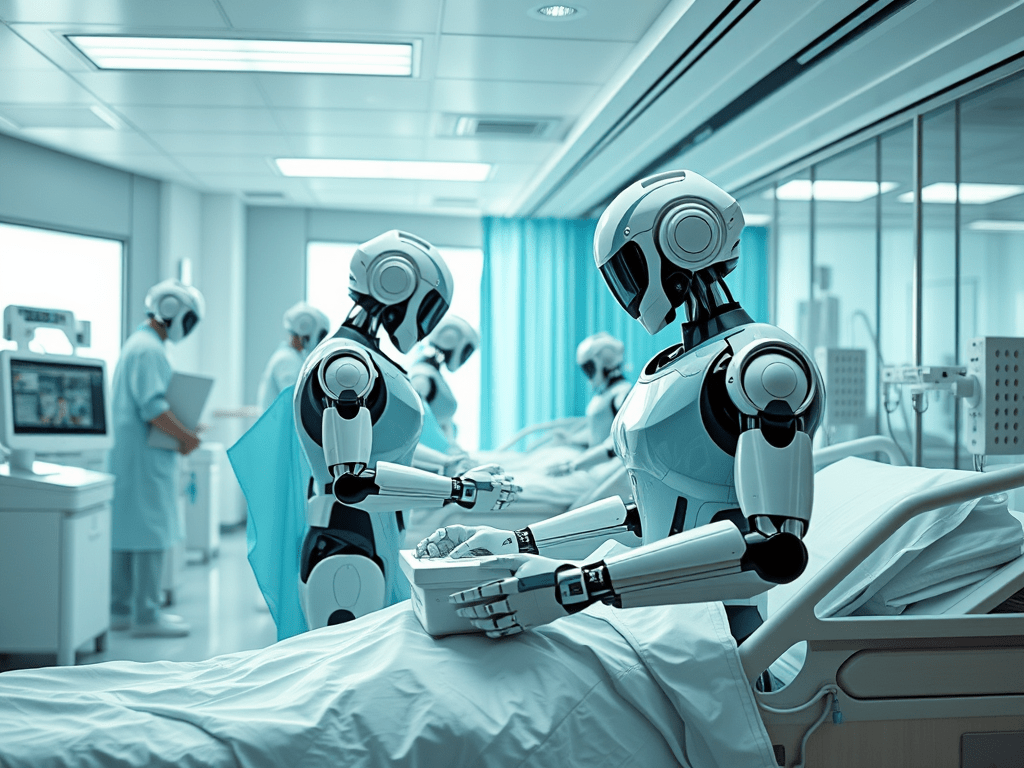
The Rise of Robot Nurses in Healthcare
Robot nurses are an emerging technology in healthcare. They’re not meant to replace human nurses, but to help them. These robots can do simple tasks like moving supplies or checking on patients.
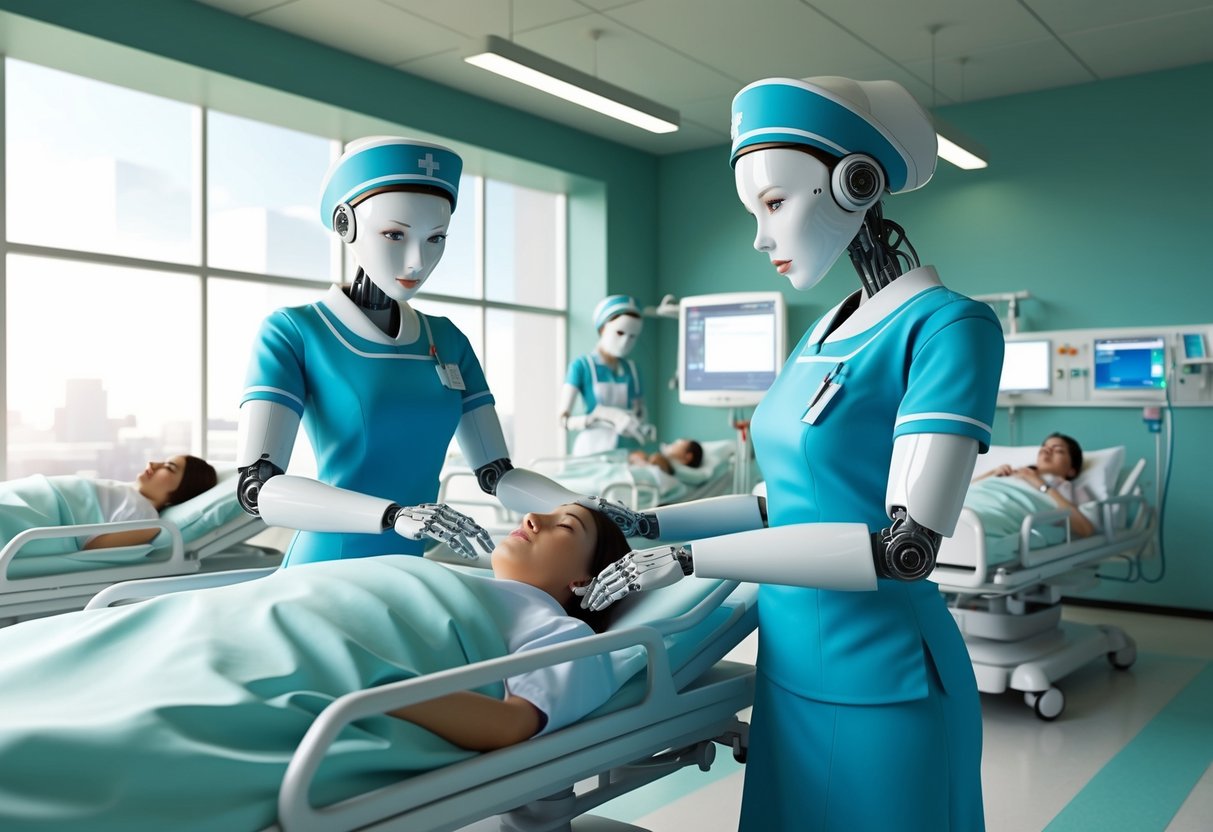
Robot nurses are machines that assist with basic healthcare tasks, freeing up human nurses to focus on more complex patient care. They can move around hospitals, deliver items, and even talk to patients. But they can’t do everything a human nurse can.
Hospitals are starting to use robot nurses more often. They help make healthcare faster and safer. As technology gets better, robot nurses might be able to do more in the future.
Key Takeaways
- Robot nurses assist with basic tasks in hospitals
- They work alongside human nurses, not replace them
- Robot nurses may take on more roles as technology improves
Table of Contents
- The Rise of Robot Nurses in Healthcare
- Key Takeaways
- Historical Context
- Advancements in Robotic Systems
- Daily Operations
- Patient Interaction
- Infection Control
- Monitoring Vital Signs
- Medication Delivery
- Impact on Outcomes
- Addressing Nursing Shortage
- Reducing Burnout
- Collaboration with Workers
- AI and Machine Learning
- Robotic Arms and Technologies
- Navigation Systems
- Health Records
- Workflow Efficiency
- Cybersecurity
- Human Connection in Care
- Public Perception
- Regulatory Challenges
- Research Directions
- Challenges and Opportunities
- The Role of Telemedicine
Evolution of Robotic Nursing
Robot nurses have come a long way since their early beginnings. Their development has been shaped by advances in technology and changing healthcare needs.
Historical Context
The idea of robotic nurses first emerged in the 1960s. Early concepts focused on simple tasks like moving patients and delivering supplies. In the 1980s, the first robotic arms for surgery appeared. These were not nurses, but they paved the way for more advanced medical robots.
The 1990s saw the rise of telepresence robots. These allowed doctors to check on patients from far away. By the 2000s, robots started to take on more nursing tasks. They could now measure vital signs and remind patients to take medicine.
Advancements in Robotic Systems
Recent years have brought big leaps in robotic nursing. Artificial intelligence and machine learning have made robots smarter. They can now understand speech and respond to complex commands.
Some modern robot nurses can:
- Lift and move patients safely
- Dispense medications accurately
- Monitor patient health around the clock
Algorithms help these robots make better choices. They can spot health issues early and alert human staff. Some can even assist in simple procedures.
The latest models use sensors to navigate hospital floors. They can avoid obstacles and find their way to patients’ rooms. As technology improves, robot nurses are becoming more helpful and easier to use.
Application of Robot Nurses in Healthcare Facilities
Robot nurses are changing how hospitals work. They help with many tasks and make patient care better. These machines can do simple jobs and complex ones too.
Daily Operations
Robot nurses do a lot of work in hospitals every day. They move supplies and equipment around. This saves time for human nurses. Robot nurses can also check on patients. They take vital signs like temperature and blood pressure.
Some robots give out medicine to patients. They make sure each person gets the right pills at the right time. This cuts down on mistakes. Robot nurses can also change bed sheets and clean rooms. They use special lights to kill germs.
Patient Interaction and Emotional Support
Robot nurses talk to patients too. They can answer simple questions about hospital rules or meal times. Some robots tell jokes or play games with patients. This helps people feel less lonely or scared in the hospital.
There are robots that look like cute animals. These are used in places where people stay for a long time. Patients can pet them and talk to them. This makes them feel better.
But robot nurses can’t replace human touch. They work with real nurses to make patients comfortable.
Infection Control and Pandemic Response
Robot nurses played a big role during COVID-19. They helped keep people safe from germs. These robots can go into rooms with sick patients. They deliver food and medicine without spreading infection.
Some robots use strong UV light to clean rooms. This kills germs that cause diseases. Robot nurses don’t get sick, so they can work non-stop during a pandemic.
They also remind people to wash hands and wear masks. This helps stop the spread of germs in hospitals.
Robotics and Patient Care
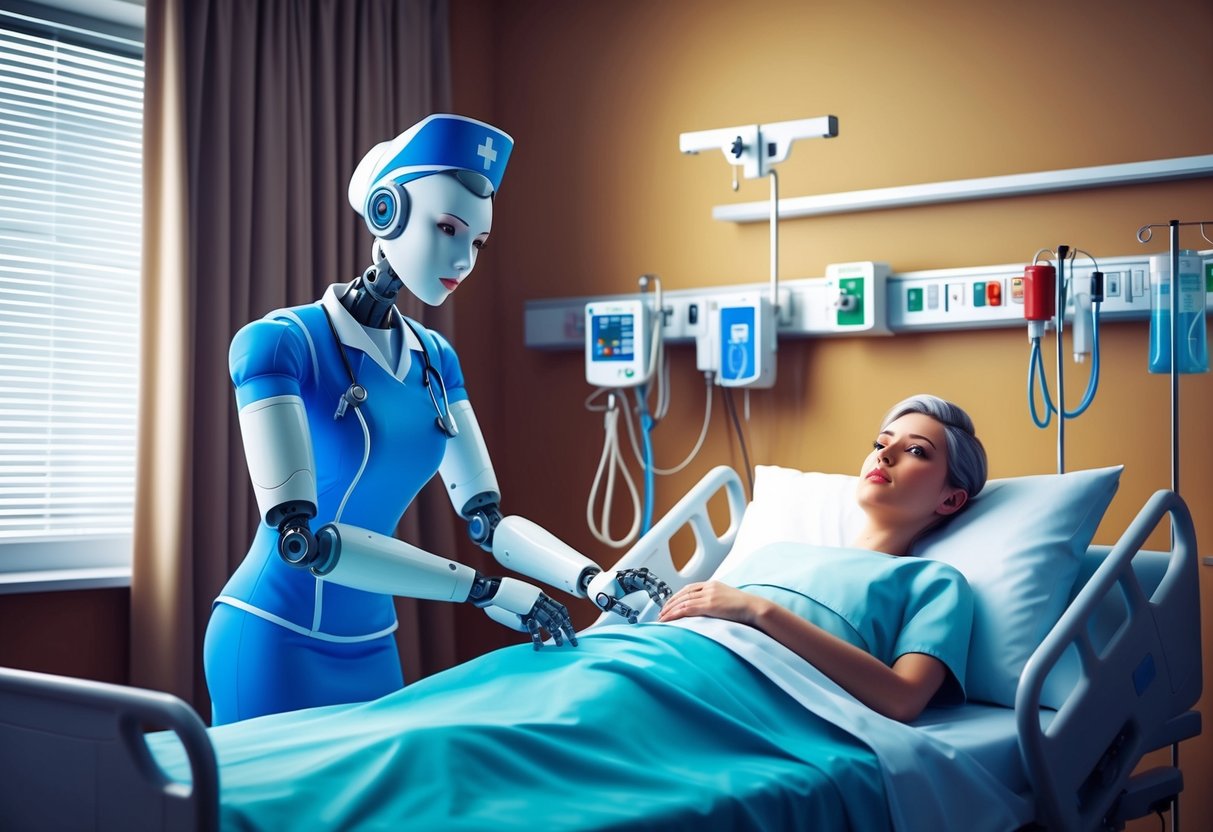
Robot nurses are changing how hospitals provide care. They assist with key tasks to improve patient health and safety.
Monitoring Vital Signs
Robot nurses use sensors to check patients’ vital signs. They measure heart rate, blood pressure, and oxygen levels. This happens automatically, without disturbing patients.
Robots can alert staff if vitals change suddenly. This quick response helps prevent emergencies. The machines track trends over time, giving doctors useful data.
Some robots use cameras to watch for falls or other issues. This keeps patients safer when human nurses are busy.
Medication Delivery and Routine Tasks
Robot nurses help give out medicines on time. They use barcode scanners to make sure patients get the right pills. This cuts down on mistakes.
The robots also do simple jobs like changing bed sheets. They can bring food trays and clean rooms. This frees up human nurses for more complex care.
Some robots lift and move patients. This reduces injuries for both patients and staff.
Impact on Patient Outcomes
Studies show robot nurses can improve patient health. Patients get medicines and care more consistently. This leads to faster healing and shorter hospital stays.
Robot nurses don’t get tired or distracted. They work 24/7, filling gaps when staff is short. This means patients always have someone watching over them.
But robots can’t replace human touch. They work best when paired with real nurses. Together, they provide better care than either could alone.
Implications for Nursing Staff
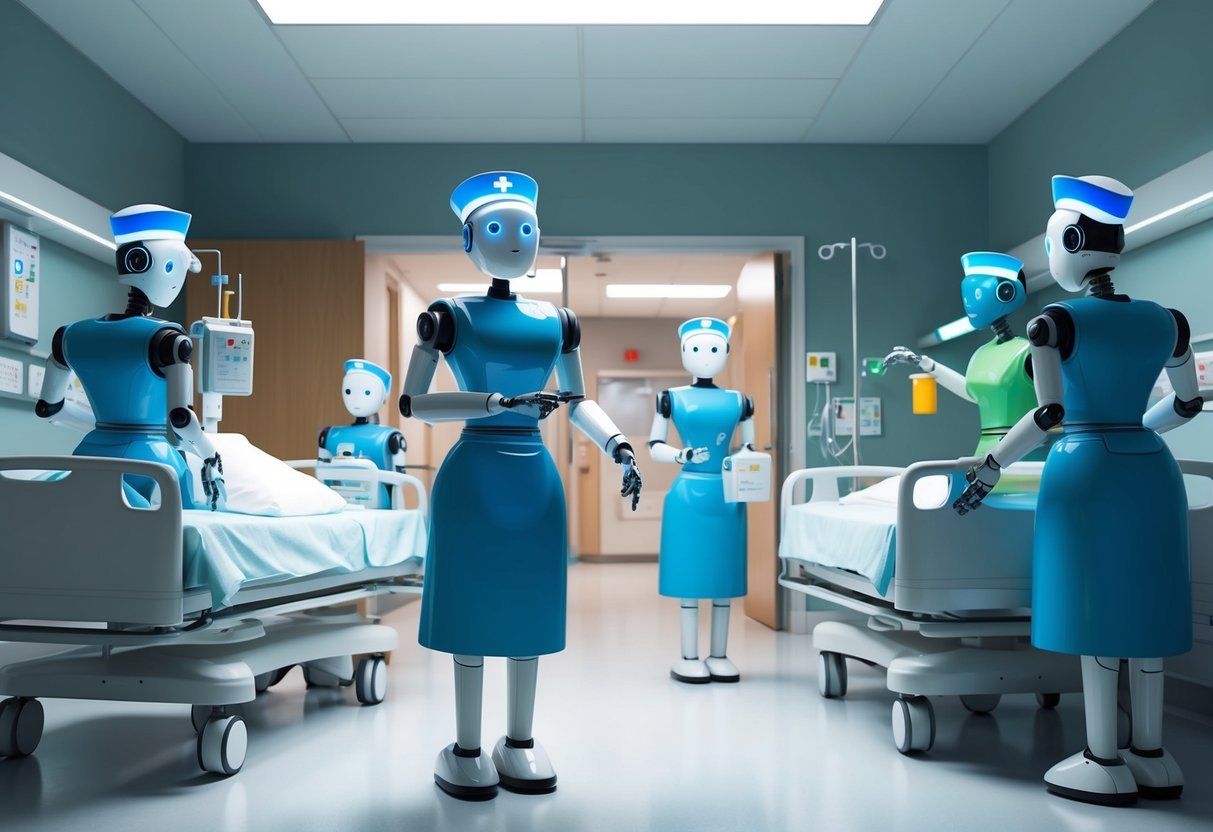
Robot nurses bring major changes to healthcare. They affect staffing, workloads, and team dynamics in hospitals and clinics. These impacts touch key areas like shortages, burnout, and teamwork.
Addressing the Nursing Shortage
Robot nurses help fill gaps in healthcare staffing. They can take on routine tasks like checking vital signs and delivering medications. This frees up human nurses for more complex patient care.
Hospitals use robots to extend their workforce. One robot can assist multiple patients at once. This helps cover more ground with fewer staff members.
Robot nurses work 24/7 without breaks. They don’t need time off or get sick. This reliability helps maintain consistent care levels even when human staff are limited.
Reducing Nurse Burnout
Robot assistants take on physically demanding jobs. They can lift and move patients safely. This reduces strain and injury risks for human nurses.
Automated systems handle paperwork and data entry. Nurses spend less time on admin tasks and more on patient care. This shift can boost job satisfaction and reduce stress.
Robots handle repetitive chores like medication distribution. Human nurses focus on tasks that need empathy and critical thinking. This variety in work can help prevent boredom and fatigue.
Collaboration with Healthcare Workers
Nurses learn to work alongside robot teammates. They develop new skills in operating and troubleshooting these devices. This tech knowledge enhances their professional growth.
Robot nurses serve as aids, not replacements. They support human decision-making with data analysis. Nurses interpret this info and make care plans.
Care teams adjust to new workflows. Nurses coordinate robot tasks and human interventions. This teamwork creates a blend of tech efficiency and human touch in patient care.
Technological Components and Operation
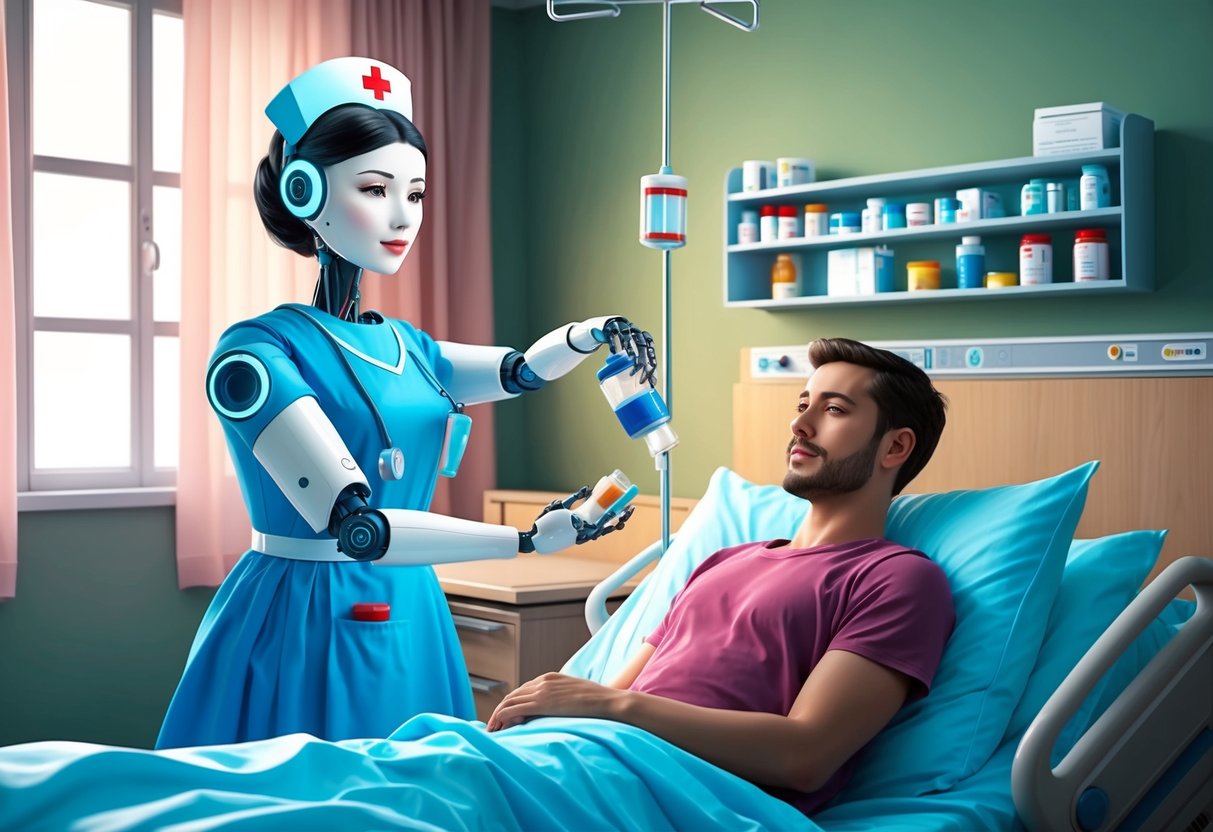
Robot nurses rely on advanced systems to provide care. These include AI algorithms, robotic arms, and navigation tools. Each plays a key role in helping robot nurses assist patients and staff.
AI and Machine Learning Algorithms
Robot nurses use AI to make decisions and learn from experiences. These algorithms process patient data and medical records. This helps robots understand symptoms and suggest treatments.
AI allows robot nurses to communicate with patients. They can answer questions and offer comfort. Machine learning helps robots improve their skills over time.
Natural language processing lets robots understand speech and text. This is crucial for taking patient histories and following doctor’s orders.
Robotic Arms and Assistive Technologies
Robot nurses have specialized arms for physical tasks. These arms can lift patients and move equipment. They’re designed to be gentle and precise.
Sensors in the arms detect pressure and temperature. This helps robots handle delicate items and avoid hurting patients.
Some robot nurses have wheels or tracks to move around. Others use legs to climb stairs or navigate rough terrain.
Grippers on robotic arms can open medication bottles and handle small objects. This helps with giving pills or changing IV bags.
Lidar and Navigation Systems
Lidar sensors help robot nurses map their surroundings. They use lasers to measure distances and detect obstacles.
This technology lets robots move safely in busy hospitals. They can avoid bumping into people or equipment.
GPS and indoor positioning systems guide robots to specific rooms. They can find patients quickly in emergencies.
Cameras and computer vision help robots recognize faces and read signs. This improves their ability to interact with staff and follow directions.
Robot nurses use these systems to navigate autonomously. They can deliver supplies or respond to calls without human guidance.
Integration with Hospital Systems
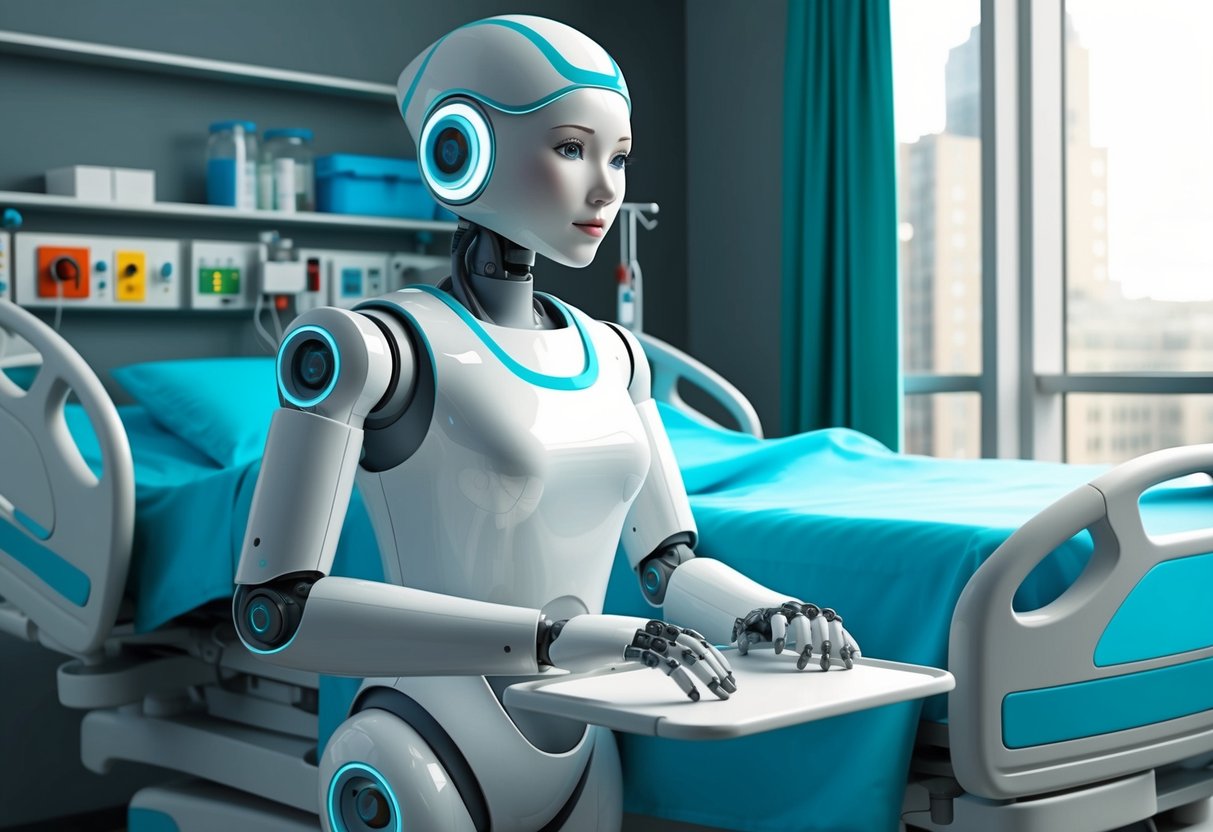
Robot nurses connect with hospital computer systems to improve patient care and streamline operations. This integration touches key areas like health records, workflow, and data security.
Electronic Health Records
Robot nurses link to electronic health records (EHRs) to access patient data. They can update vital signs, medication lists, and treatment notes in real-time. This keeps doctors and human nurses informed.
EHR integration allows robot nurses to:
- Check for drug allergies
- Review lab results
- Track patient progress
Seamless data flow between robots and EHRs reduces errors and saves time. It also helps create a complete picture of each patient’s health.
Hospital Workflow Efficiency
Robot nurses fit into existing hospital workflows to boost efficiency. They can:
- Deliver medications on schedule
- Transport lab samples
- Restock supplies
These tasks free up human staff for more complex care. Robot nurses also send alerts about patient needs or equipment issues.
Integrating robots into hospital systems improves task scheduling and resource allocation. This leads to shorter wait times and better patient experiences.
Cybersecurity Considerations
Connecting robot nurses to hospital networks raises cybersecurity concerns. Hospitals must protect patient data and prevent unauthorized access to robot controls.
Key security measures include:
- Strong encryption for all data transfers
- Regular software updates for robots
- Strict access controls for staff
Hospitals also need plans to handle potential cyber attacks or system failures. This ensures patient care continues even if robot nurses go offline.
Proper cybersecurity protects patient privacy and maintains trust in robot nurse technology.
Ethical and Social Implications
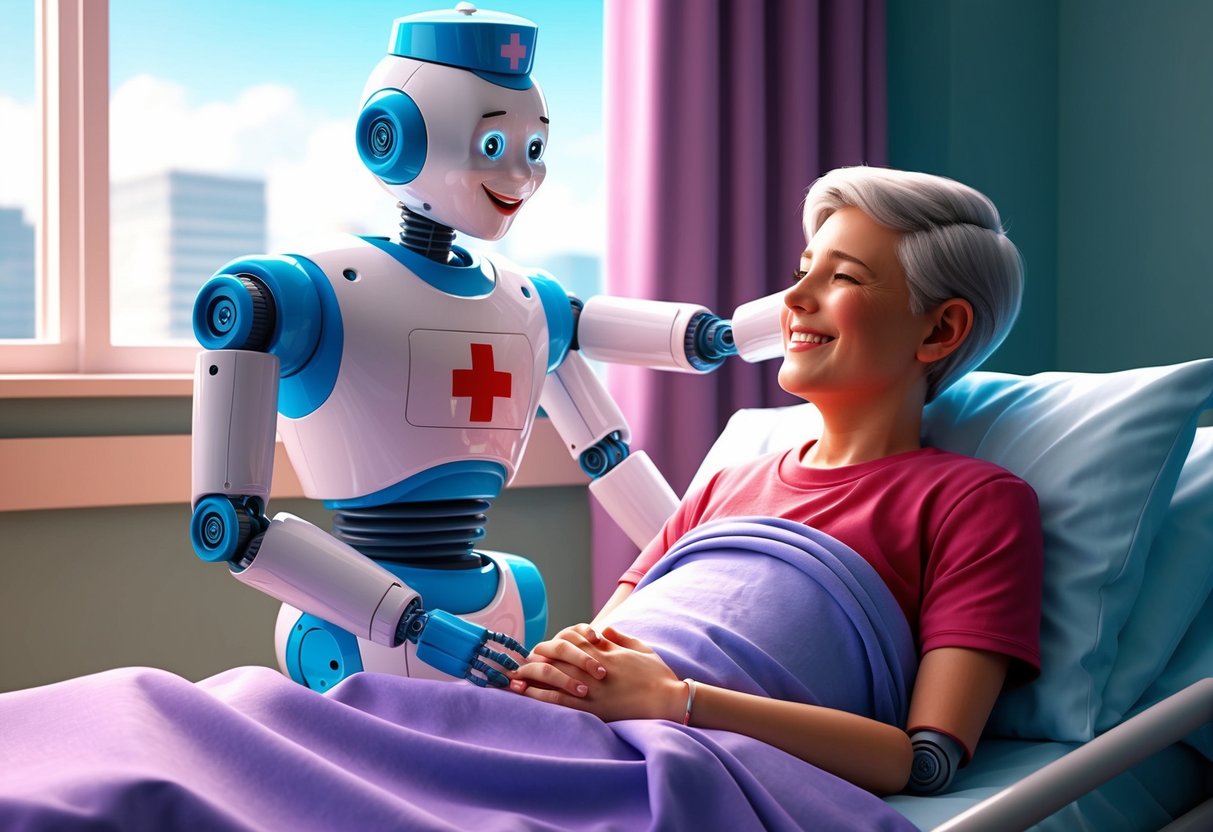
Robot nurses bring new challenges to healthcare. Their use raises questions about patient care, public views, and legal issues.
Human Connection in Patient Care
Robot nurses can’t replace human touch and empathy. Patients often need emotional support during treatment. Machines may miss subtle cues that show a patient’s mood or needs.
Some worry robot nurses could make healthcare feel cold and impersonal. Patients might feel less cared for without human nurses. But robots could free up human staff to spend more quality time with patients who need it most.
Robot nurses might work well for basic tasks like taking vital signs. This could let human nurses focus on complex care and building patient relationships.
Public Perception and Acceptance
Many people feel unsure about robot nurses. They may not trust machines to provide proper care. Some patients might refuse treatment from a robot.
Education could help the public understand robot nurses better. Showing how they can improve care might increase trust. Hospitals could offer patients a choice between human and robot nurses.
As robot nurses become more common, people may get used to them. Young people who grow up with technology might accept them more easily.
Regulatory and Legal Challenges
Laws about robot nurses are still new and changing. It’s not clear who is responsible if a robot nurse makes a mistake. The hospital, the maker, or the programmer could be at fault.
Robot nurses need to follow privacy laws to protect patient data. They must keep information safe and only share it with the right people.
Rules about robot nurse training and use need to be made. This will help make sure they are safe and work well. Regular checks and updates will be important to keep robot nurses running properly.
Future Perspectives in Robotic Nursing
Robotic nursing is set to transform healthcare. New technologies and care models will change how nurses work and interact with patients. This field offers exciting possibilities but also faces some hurdles.
Innovation and Research Directions
Researchers are developing robots to help nurses with routine tasks. These include moving patients, delivering supplies, and monitoring vital signs. Some robots can even draw blood or insert IVs.
AI-powered robots may one day assist with patient assessments. They could spot early signs of health issues by analyzing data. This would let nurses focus more on complex care and patient interaction.
Robots designed for elder care are another key area. As populations age, these could help seniors stay independent longer. Some prototypes can remind people to take medicine or call for help if someone falls.
Challenges and Opportunities
Training nurses to work with robots is crucial. Schools will need to update their programs. Nurses may need new skills in tech and data analysis.
Patient trust is another challenge. Some people may feel uneasy with robot caregivers. Nurses will play a key role in helping patients adapt.
Cost is also an issue. Robots are expensive to develop and maintain. But they could save money long-term by preventing errors and freeing up nurses’ time.
There’s a chance to improve working conditions for nurses. Robots could take on physically demanding tasks. This might reduce injuries and burnout among nursing staff.
The Role of Telemedicine
Telemedicine is growing fast. Robotic nurses could play a big part in this trend. They might act as a nurse’s “hands” during remote exams.
Some robots can already take basic readings like temperature and heart rate. In the future, they might perform more complex tests guided by a remote nurse.
This could bring better care to rural areas. It may also help during health crises when in-person care is risky. Nurses will need to learn how to provide care through these robotic systems.
Telemedicine robots could also help with home care. They might check on patients between nurse visits. This could help people stay out of hospitals and manage chronic conditions better.
Conclusion
Robot nurses are changing healthcare. They help doctors and human nurses do their jobs better. These machines can lift patients, give medicine, and check vital signs.
Hospitals using robot nurses see good results. Patients get more attention. Nurses have more time for complex tasks. The robots work 24/7 without getting tired.
There are some challenges. The cost of robot nurses is high. Training staff to use them takes time. Some patients feel uncomfortable with machines caring for them.
As technology improves, robot nurses will likely become more common. They won’t replace human nurses. Instead, they’ll work alongside people to improve patient care.
The future of healthcare includes both human and robot caregivers. This mix could lead to better outcomes for patients. It may also help address nursing shortages in many countries.
Robot nurses are an exciting development in medicine. They show how technology can support and enhance human care. As research continues, we’ll see more ways robots can help in hospitals and clinics.

 TechPowered
Leave a comment